CHELSEA TANK FARM GASOLINE RELEASE
WHAT HAPPENED?
On August 18th, an MIPC operator noticed a faint odor while making routine checks in the northwest corner of our Chelsea Tank Farm. The source of the odor was determined to be a light gasoline and water mixture (approximately 2% gasoline to 98% water), emanating from a concrete stormwater drainage pipe. Upon discovery, MIPC immediately began implementing measures to contain and clean up the impacted water.
At the same time, MIPC notified state and county agencies, as well as municipal officials and our community emergency responders. MIPC also notified nearby neighbors in Bethel and Upper Chichester that there would be increased maintenance activity at the site. Additionally, fence line air quality readings were repeatedly taken, and results confirmed there were no impacts at the fence line of our facility.INVESTIGATION PROCESS
After our initial mitigation efforts, MIPC began what would become a multi-month investigatory process to identify the source of the leak. Simultaneously, MIPC sought and received a PA Dep. of Environmental Protection permit to install a water treatment unit that has remained in operation to this day. Over the subsequent weeks, MIPC worked methodically to identify and rule out potential sources, which involved excavation of the concrete pipe, several soil digs (some to depths of 17 feet), numerous field tank valve and flange inspections, checking underground test stations, reviewing tank level data, and historical site data, and conducting static pressure tests and hydro tests of tanks in the impacted area. All investigatory efforts over this time did not yield a clear source or even the presence of a broader issue.
MIPC also provided regulatory agencies with updates and has complied with every request and recommendation conveyed to us.SOURCE DISCOVERY
As we continued to investigate the area of impact, we installed soil borings (up to depths of 35 feet), and in early December, we discovered gasoline impacted soil. In some cases, we found gasoline impacted groundwater in one area of the site, including within 30 feet of our fence line. At this point, we made notifications to all Federal, State and County agencies as well as municipal officials, emergency responders, and elected officials. MIPC also conducted door-to-door community outreach, notifying our fence line neighbors living within roughly 1,000 feet of the impacted area.
On December 13 , one of our storage tanks, which was previously taken out of service and emptied as part of this investigation, was confirmed to have a 1/4-inch hole in the interior floor. This discovery then initiated a process by which we could calculate a maximum potential release total based on data and evidence. And this is how we arrived at the potential total release of 9,000 barrels of gasoline in the northwest corner of our property, which we reported to the Pipeline and Hazardous Materials Safety Administration (PHMSA).OUR PATH FORWARD
KEY TAKEAWAYS
- No odors have been detected offsite or sheens observed in surface water.
- According to well samples regularly collected since January, MIPC and PA DEP both conclude that no residential drinking water wells have been impacted by this release to date. MIPC is continuing to retest private drinking wells on a set schedule.
Per PADEP Requirements:
- Bottled water has been offered and will be provided, if requested, to residents within 1,000 ft. of our western boundary who utilize wells for potable water.
- MIPC has increased the frequency of fence line monitoring to a daily schedule utilizing prevailing EPA methodology.
- MIPC will hold public meetings in conjunction with our local municipalities as well as with state and federal agencies to continue communicating updates with our neighbors.
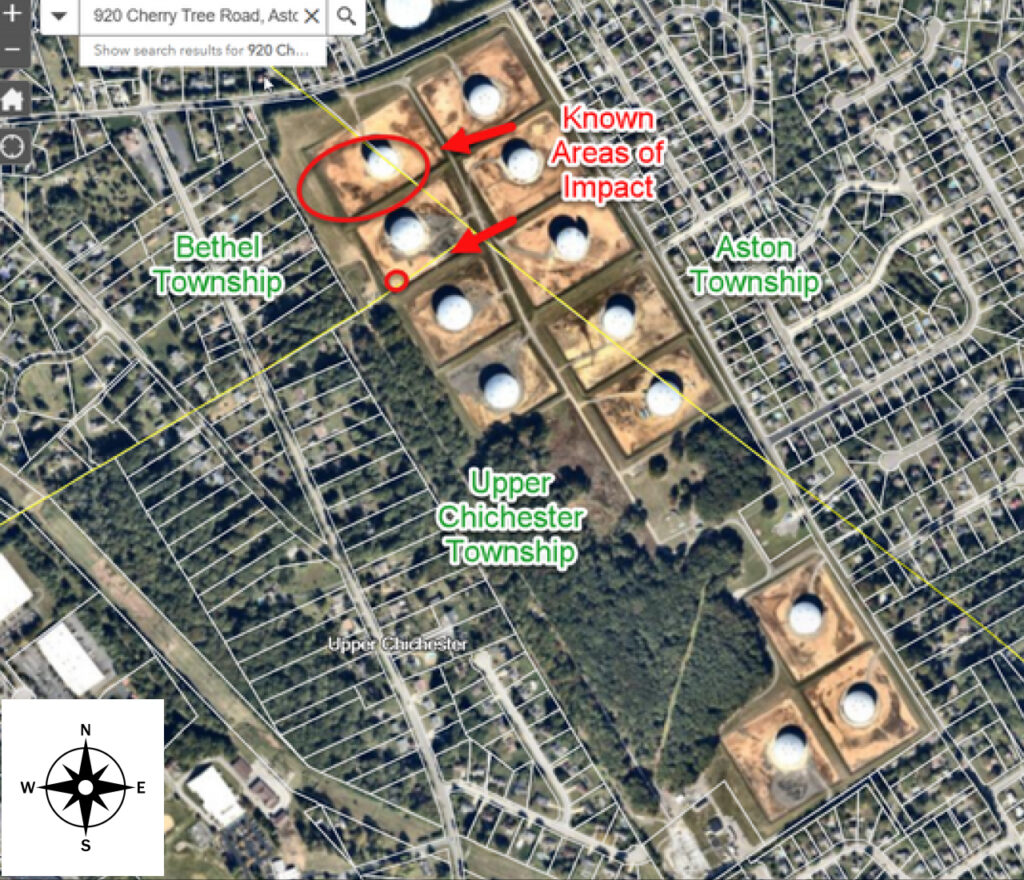
MAP KEY
- Please note that the ‘Areas of Impact’ are representative, and not drawn exactly to scale.
- The yellow lines correlate to municipal boundary lines.
- White lines correlate to private property lines.
OUTREACH
We understand that you may have additional questions, and we are available to speak with you at your convenience either on a call or in person at your home, if you prefer.
Thank you, and we appreciate your understanding as we work to fully remediate our site.